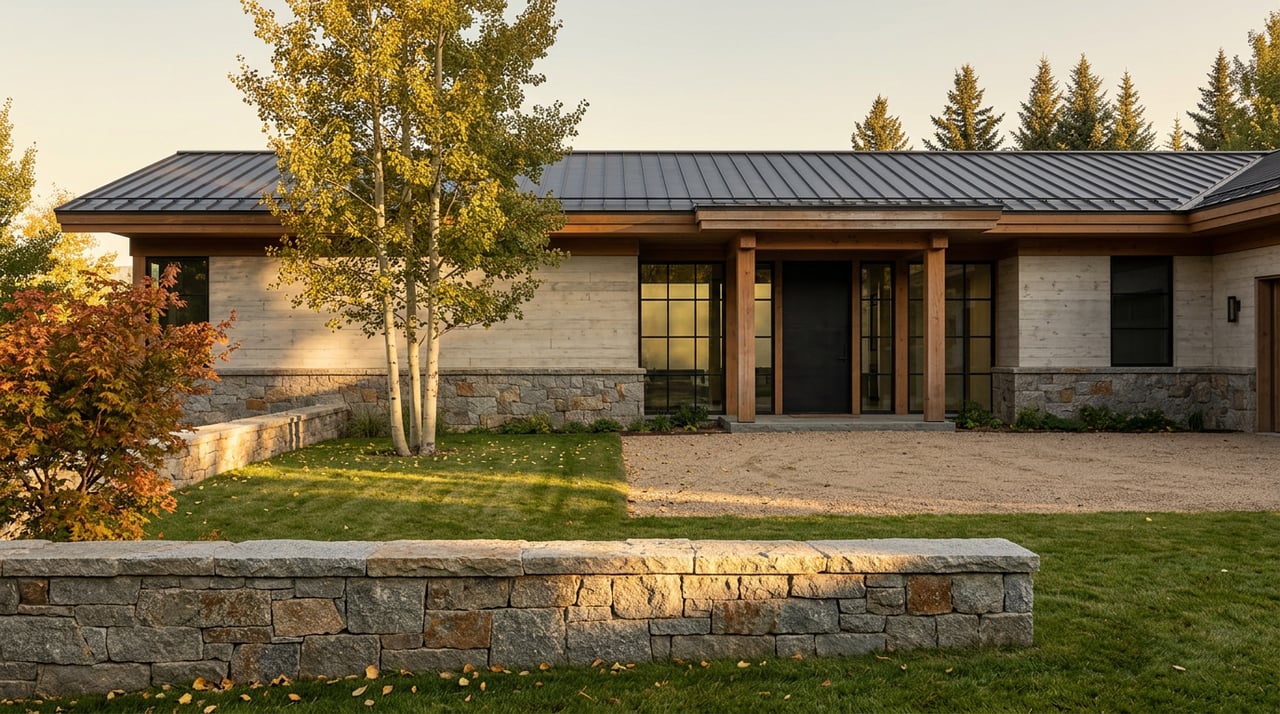
A buyer closing on a home in the lower section of Red Mountain writes a check for 1.5 percent of the purchase price before the deed ever reaches the recorder's desk. Their neighbor a quarter mile up the same road, on the same mountain, closing the same week, owes nothing. Same view, same zip code, same word "Aspen" on the listing sheet. Different bill entirely.
The dividing line isn't the price of the home or the size of the lot. It's a property boundary that has nothing to do with how the listing was marketed: whether that specific parcel sits inside the City of Aspen or in unincorporated Pitkin County. Every buyer assumes an Aspen address means an Aspen tax rate. That assumption is wrong often enough that it's worth understanding exactly where the line falls before you write an offer, not after you've opened escrow.
The Tax Follows a Property Line, Not a Mailing Address
Aspen's real estate transfer tax applies inside the city limits and nowhere else. The trouble is that "city limits" has been drawn and redrawn through decades of individual annexations, and the result is a patchwork that doesn't track neighborhood names or postal boundaries.
Red Mountain is the clearest example. The lower portion, closer to town, has been annexed into the City of Aspen and carries the tax. The upper portion remains in unincorporated Pitkin County and doesn't. The rough dividing line runs near the Rio Grande Trail, though the exact parcel boundary should always be confirmed rather than assumed from a map.
Knollwood works the same way but along a different line. Properties on the north side of Highway 82 are inside city limits and owe the tax. Some properties on the river side, south of the highway, are not.
Other pockets are more clean cut. Five Trees, originally part of unincorporated Pitkin County, was annexed into the city and now owes the tax. Maroon Creek and the core of Aspen Highlands are annexed as well. Meadowood and Mountain Valley have never been annexed and remain in the county, so neither owes it. The Aspen Highlands area along Glen Eagles Drive sits in that same unincorporated pocket, distinct from the Aspen Highlands parcels closer to the ski base that were brought into the city.
None of this is visible from a listing photo or a street address. It's visible from a parcel record and a city limits map, which is exactly why the question belongs in the due diligence conversation before an offer goes in, not in the closing disclosure after it's too late to renegotiate.
What the 1.5 Percent Actually Pays For
Where the tax does apply, it isn't one tax. It's two, layered together, each created by a separate Aspen ballot measure decades apart.
The larger piece, 1.0 percent, funds the city's affordable housing programs. It carries one meaningful break: the first $100,000 of the sale price is excluded from taxation on this portion. That exclusion does more work on a $900,000 condo than it does on a $9 million estate, since it shields a much larger share of a smaller transaction.
The smaller piece, 0.5 percent, funds the Wheeler Opera House and the city's broader visual and performing arts programming, including operations at the Red Brick Building. Together the two add up to the roughly 1.5 percent figure agents quote, and both are collected the same way: the buyer pays, the title company submits the paperwork, and the City of Aspen requires the tax cleared before the deed can be recorded with Pitkin County. If it isn't paid, the city can file a lien against the property to collect it later.
Exemptions exist but are narrow: transfers to government or charitable entities, gifts made for love and affection rather than money, transfers triggered by death or a will, and termination of joint tenancy without additional payment. A straightforward purchase between unrelated buyer and seller doesn't qualify for any of them.
Why This Number Is Bigger Than It Looks
Transfer taxes like this one aren't a rounding error in Aspen's budget. Reporting from late 2025 put Aspen's annual collections from its real estate transfer taxes at roughly $31.9 million, among the highest of any Colorado mountain town with this kind of tax. That scale matters for two reasons.
First, this revenue stream isn't going away or getting simplified. Colorado's Taxpayer's Bill of Rights, passed in 1992, bars any city or county from creating a new transfer tax. Aspen's was grandfathered in because it predated that ban, one of only twelve Colorado municipalities in that position. No new mountain town can start one from scratch, which means the patchwork of who owes it and who doesn't is effectively locked in rather than heading toward some future cleanup.
Second, this money is actively being put to work right now, not sitting in a reserve fund. In November 2025, Aspen voters were asked to approve city bonds to help finance the Lumberyard affordable housing development in the Aspen Airport Business Center, a project planned around a walkable cluster that already includes a pub, bakery, grocery, and liquor store. The bond question was structured so the repayment would come from existing affordable housing transfer tax revenue rather than a new tax. Whatever the outcome, the fact that the city is willing to bond against this revenue stream tells you it's viewed as a stable, growing source of funding, which is one more reason the underlying boundary question deserves real attention rather than a guess.
How Snowmass Handles the Same Idea Differently
Snowmass Village avoids Aspen's street-by-street puzzle at the town level. Its transfer tax is a flat 1 percent applied uniformly across the entire town, so a buyer doesn't need to check which side of a road a Snowmass Village parcel sits on.
The puzzle reappears at the building level instead. Properties inside the Snowmass Base Village Metro District carry an additional 1 percent on top of the town's base rate, bringing the total to 2 percent for buildings within that district's boundary. That includes several of Base Village's newer residences, among them Aura Snowmass.
The mechanism is different from Aspen's, but the underlying lesson is the same. The name of the town on the listing doesn't tell you the number. The specific parcel or building does.
What to Confirm Before You Write an Offer
- Ask whether the parcel is inside City of Aspen limits or unincorporated Pitkin County, not just what the mailing address says
- If the property is in Snowmass Village, confirm whether the building falls inside the Base Village Metro District boundary
- If you're buying in Aspen, have the title company calculate the tax using the $100,000 exclusion on the housing portion so the number in your closing estimate is accurate
- If the transaction involves a trust, gift, or entity transfer, ask early whether one of the narrow exemption categories applies, since the paperwork has to be filed at closing, not after
- Build the transfer tax into your offer math the same way you would a commission or a prorated tax bill, rather than discovering it on the closing disclosure
A title company will run the exact calculation and file the right forms. What they generally won't do is flag, unprompted, that the parcel two doors down owes a different rate. That's a local knowledge question, and it's worth asking before the number becomes a surprise rather than a line item you planned for.
For a broader look at the kinds of costs that show up between an accepted offer and a closing table, the unexpected costs of buying a home guide covers more of the categories that catch buyers off guard, and the Snowmass Base Village area guide walks through the neighborhood's layout in more detail for anyone comparing specific buildings.
A Few Questions Worth Answering Directly
Does the transfer tax rate change based on price? No. It's a flat percentage of the sale price wherever it applies. The one adjustment is Aspen's $100,000 exclusion on the affordable housing portion, which shields a larger share of a lower-priced transaction than a high-value one.
Could Aspen or Snowmass Village raise these rates? Any increase would require voter approval through a ballot measure, the same process that created the taxes in the first place. Because of the 1992 TABOR restriction, no jurisdiction can introduce a brand new transfer tax today, so the twelve towns that already have one, Aspen and Snowmass Village among them, are unlikely to see new competitors join the list.
Who is actually responsible for paying it? Convention places the obligation on the buyer, and that's how the Town of Snowmass Village and the City of Aspen both structure it by default. The contract can allocate it differently between buyer and seller, so it's worth confirming in writing rather than assuming.
What if I'm not sure whether my target property is annexed? Pitkin County's property tax and assessment FAQ is a starting point, but the cleanest answer comes from a parcel-specific check with the city or county community development office before you write an offer, not after.
Every closing table in Aspen and Snowmass has this same invisible line running through it somewhere. Knowing where it falls on a specific property, before the offer goes in, is the difference between a clean closing statement and an uncomfortable conversation the week before you're supposed to sign. If you're evaluating a specific address and want a straight answer on which side of that line it falls, Steve Harriage is glad to help you check before you write the offer, not after.